Africa does not only have a doctor shortage. We have a doctor retention problem. Every day, across hospitals and clinics in Africa, healthcare professionals walk into facilities knowing they may have dozens of patients waiting for them.
A doctor may move from one patient to another for hours.
A nurse may be managing multiple patients simultaneously.
A pharmacist may be reviewing prescriptions, counselling patients and handling dispensing.
A community health worker may be making critical decisions with limited resources.
A clinician can see 50 or more patients in a day in a high-volume setting. By the time the last patient leaves, the clinical work may not be over. There are still notes to write, results to review, questions to answer, referrals to prepare and follow-ups to organise.
Then they go home. And tomorrow, they do it again.
This is the human side of Africa’s healthcare workforce crisis.
And increasingly, many healthcare professionals are asking a simple question:
“Why should I keep doing this when I can practise somewhere else with better working conditions, better pay and better support?”
That is the challenge behind Africa’s health worker “Japa” wave — the migration of doctors, nurses, pharmacists and other trained professionals in search of better opportunities.
According to the World Health Organization, Africa has only around 46% of the health workforce it needs, and the continent could face a shortage of more than 6 million health workers by 2035 if current trends continue. WHO also reports significant outward migration of African-trained health professionals.
We cannot solve this problem with technology alone.
But we can ask an important question:
What if the healthcare professionals who remain could do more, with less administrative burden, better clinical support, and more time to actually care for patients?
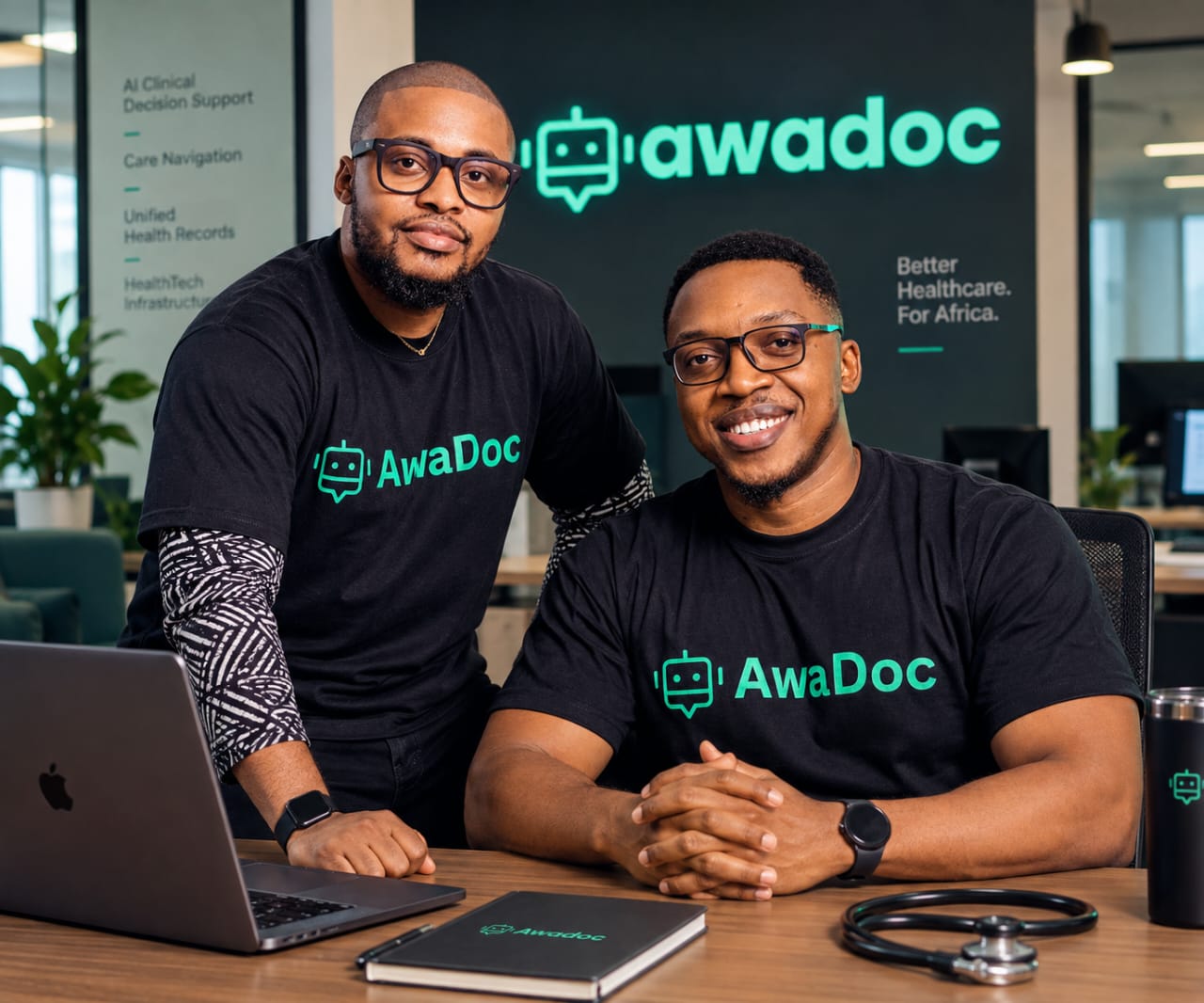
Today, we are introducing AwaDoc Clinical Decision Support Tool (CDST) — an AI-powered clinical intelligence platform built to help healthcare professionals reason through cases, access relevant medical knowledge, document encounters, and make better-informed clinical decisions.
AwaDoc CDST is a clinical decision support platform designed to assist healthcare professionals throughout the clinical encounter.
AwaDoc brings this capability into a conversational AI workflow.
A clinician can provide the relevant clinical information and use AwaDoc to explore the case, generate possible differentials, structure an assessment, develop a preliminary management plan, ask clinical questions, and turn clinical reasoning into usable documentation.The goal is simple: Give clinicians an intelligent clinical copilot that helps them spend less time searching, typing, and organising information and more time caring for patients.
THE HIDDEN PROBLEM IN HEALTHCARE: TIME
When we talk about Africa’s healthcare crisis, we often talk about the number of doctors, nurses and other healthcare professionals. But there is another problem.
How much of their working day is actually spent doing the work that only they can do?
A doctor is trained to examine patients, reason through complex clinical problems, make decisions and provide care. But a significant amount of their time can also disappear into searching for information, writing notes, summarising patient histories, organising clinical information and completing repetitive documentation.
The same applies across the healthcare workforce. Every minute spent on repetitive administrative work is a minute that could have been spent with a patient. And when you multiply that across thousands of healthcare professionals and millions of patient encounters, the productivity loss becomes enormous.
AwaDoc CDST is designed to address part of this problem.

YOUR CLINICAL COPILOT
AwaDoc CDST works as an intelligent clinical copilot. A clinician can provide relevant patient information and use AwaDoc to support different stages of clinical reasoning.
Clinical Case Analysis
AwaDoc can help organise information from a clinical encounter, including symptoms, history, medications, examination findings, laboratory results and other relevant information. Instead of working through fragmented information, clinicians can use the system to structure the clinical picture.
Differential Diagnosis
Clinical presentations are rarely straightforward. A patient may present with symptoms that could correspond to several different conditions. AwaDoc can help clinicians generate and explore possible differential diagnoses, consider supporting and conflicting features, identify alternative explanations and highlight additional information that may help narrow the possibilities.
The system does not make the final diagnosis.
The clinician does.
Clinical Assessment & Plan
AwaDoc can help clinicians structure clinical assessments and draft plans based on the information provided. This can help transform clinical reasoning into a clearer, more organised format that the clinician can review, modify and finalise.
Clinical Questions
Medicine changes constantly. Clinicians need to look up information, clarify concepts and explore clinical questions throughout the day.
AwaDoc provides a conversational interface for clinical questions, helping healthcare professionals access relevant clinical knowledge without unnecessarily interrupting their workflow.
Clinical Documentation
Documentation is essential. But documentation can also consume enormous amounts of clinical time. AwaDoc can assist with drafting structured clinical notes, summaries, assessments and plans. The clinician reviews, edits and approves the final documentation.
AwaDoc writes the draft. The clinician owns the record.
Patient Summaries
AwaDoc can help turn large amounts of clinical information into concise summaries, helping clinicians quickly understand the patient’s history, active problems, medications, investigations and other relevant information.
Clinical Safety Considerations
Where appropriate information is available, AwaDoc can also help surface relevant medication, interaction, contraindication, allergy and other clinical safety considerations.
These are decision-support outputs. They do not replace professional verification.
WHAT THIS MEANS FOR THE AFRICAN CLINICIAN
Imagine a doctor who sees 50 patients in a day. Now imagine that doctor having an AI clinical copilot that helps organise cases, explore differentials, draft documentation and answer clinical questions. The objective isn’t necessarily to make the doctor see 100 patients. It is to make the doctor’s existing 50 patients less overwhelming.
That distinction is important. Healthcare productivity should not mean pushing clinicians harder. It should mean removing unnecessary friction from their work. If technology can reduce the time spent on repetitive tasks, clinicians can redirect more of their attention toward patients, complex cases, communication and clinical decisions.
That is how technology can become part of the answer to healthcare workforce pressure.
CAN AWADOC CDST HELP FIGHT BRAIN DRAIN?
We believe it can help address one part of the problem. AwaDoc cannot fix low salaries. It cannot independently change working conditions. It cannot stop international recruitment. It cannot solve health system underfunding. Those require policy, investment, better employment conditions, stronger health systems and deliberate workforce-retention strategies.
But technology can help change the experience of practising medicine.
If a clinician can spend less time documenting, find relevant clinical information faster, structure complex cases more efficiently, reduce repetitive administrative work, make better use of available clinical knowledge and spend more time on actual patient care, then the clinical environment can become more supportive.
The goal is not to convince every doctor to stay but to make staying and practising here more sustainable.
AND IT GOES BEYOND DOCTORS
Africa’s health workforce crisis is not just a doctor problem. It affects nurses, pharmacists, laboratory scientists, community health workers, midwives, physician assistants and other clinical professionals.
AwaDoc CDST is therefore designed as a platform that can support healthcare professionals according to their roles, training and scope of practice. Because when one healthcare professional becomes more efficient, the entire care pathway can benefit.
WHAT ABOUT HOSPITALS AND CLINICS?
This is where AwaDoc CDST becomes more than a clinical tool. It becomes healthcare infrastructure. A hospital does not only need doctors. It needs a system that allows those doctors, nurses, pharmacists, administrators, and other professionals to work efficiently together. AwaDoc CDST can become an intelligent layer within that system. And that has a direct business implication.
More Capacity Without Simply Adding More Staff
If clinicians spend less time on repetitive documentation and information retrieval, organisations can potentially increase the number of patient encounters their existing workforce can effectively manage.
That can mean greater utilisation of existing clinical capacity.
More appointments.
More consultations.
More follow-ups.
More patients served.
And potentially more revenue.
Better Patient Conversion
A healthcare organisation may receive thousands of patient interactions through its website, WhatsApp channel, app, call centre or physical facility. Not every interaction becomes a consultation.
AwaDoc can help organisations create intelligent patient journeys that move appropriate patients from:
Symptom → Triage → Consultation → Investigation → Treatment → Pharmacy → Follow-up
Instead of losing the patient somewhere along that journey, the organisation can create a more connected care experience.
More Revenue From Existing Infrastructure
Hospitals and clinics already have expensive infrastructure.
They have consultation rooms, doctors, nurses, laboratories, pharmacies and diagnostic equipment. They have operating costs whether every available capacity is fully utilised or not. AwaDoc CDST can help organisations improve the productivity of that existing infrastructure.
The opportunity is not simply: “Do more work.”
It is: “Get more value from the healthcare capacity you have already invested in.”
Reduced Administrative Costs
Time is money in healthcare.
If a clinician spends fewer hours on repetitive documentation and information management, the organisation potentially reduces the operational burden associated with those processes. That can improve efficiency and allow staff to focus on higher-value activities.
Better Patient Experience
Patients don’t want to spend hours waiting for a doctor who is buried in paperwork.
They want to be seen.
They want their concerns understood.
They want clear communication.
They want continuity.
They want to know what happens next.
By supporting clinicians behind the scenes, AwaDoc can help organisations build faster and more connected patient journeys. And better patient experiences can support retention and repeat utilisation.

THE BUSINESS CASE FOR CLINICAL AI
For healthcare organisations, the value proposition is broader than artificial intelligence.
It is about:
- Productivity.
- Capacity.
- Patient experience.
- Clinical support.
- Operational efficiency.
- Revenue capture.
- Workforce sustainability.
A hospital that can serve more patients with its existing capacity has an economic advantage.
A clinic that can reduce administrative overhead has an economic advantage.
A pharmacy that can improve clinical workflow has an economic advantage.
A healthcare organisation that can retain patients across a connected care journey has an economic advantage.
This is where clinical AI becomes infrastructure rather than a novelty.
AFRICA CANNOT AFFORD TO LOSE ITS HEALTHCARE WORKFORCE
The conversation around African healthcare often focuses on building more hospitals, training more doctors, and importing more technology.
We need all of those things.
But we also need to ask:
How do we make the professionals already working in these systems more effective?
Africa is simultaneously facing severe workforce shortages and significant migration of trained professionals.
This is not just about numbers.
Every healthcare professional who leaves represents years of education, training and clinical experience.
But the answer cannot simply be: “Don’t leave.”
We have to build systems worth staying in.
We have to make healthcare work more sustainable.
We have to give clinicians better tools.
We have to reduce unnecessary administrative burden.
We have to improve productivity without burning people out.
And we have to create healthcare organisations that can generate enough revenue to invest back into their people, infrastructure and services.
THE FUTURE OF HEALTHCARE IN AFRICA
The future may not be about choosing between humans and artificial intelligence.
It may be about what happens when highly trained humans finally have the tools they deserve.
A doctor with an intelligent clinical copilot.
A pharmacist with better clinical support.
A nurse with less documentation burden.
A clinic with a more efficient patient journey.
A hospital that can serve more patients without simply increasing administrative overhead.
A healthcare organisation that can use technology to generate more sustainable revenue and reinvest in its workforce.
That is the future we are building. AwaDoc CDST is not here to replace the people who care for Africa. It is here to help them care for more people, with less friction. Because Africa doesn’t just need more healthcare workers. Africa needs to make every healthcare worker count.
To access AwaDoc CDST for your organization, send an email to cdst@awadoc.com and we will follow up within 24 hours.